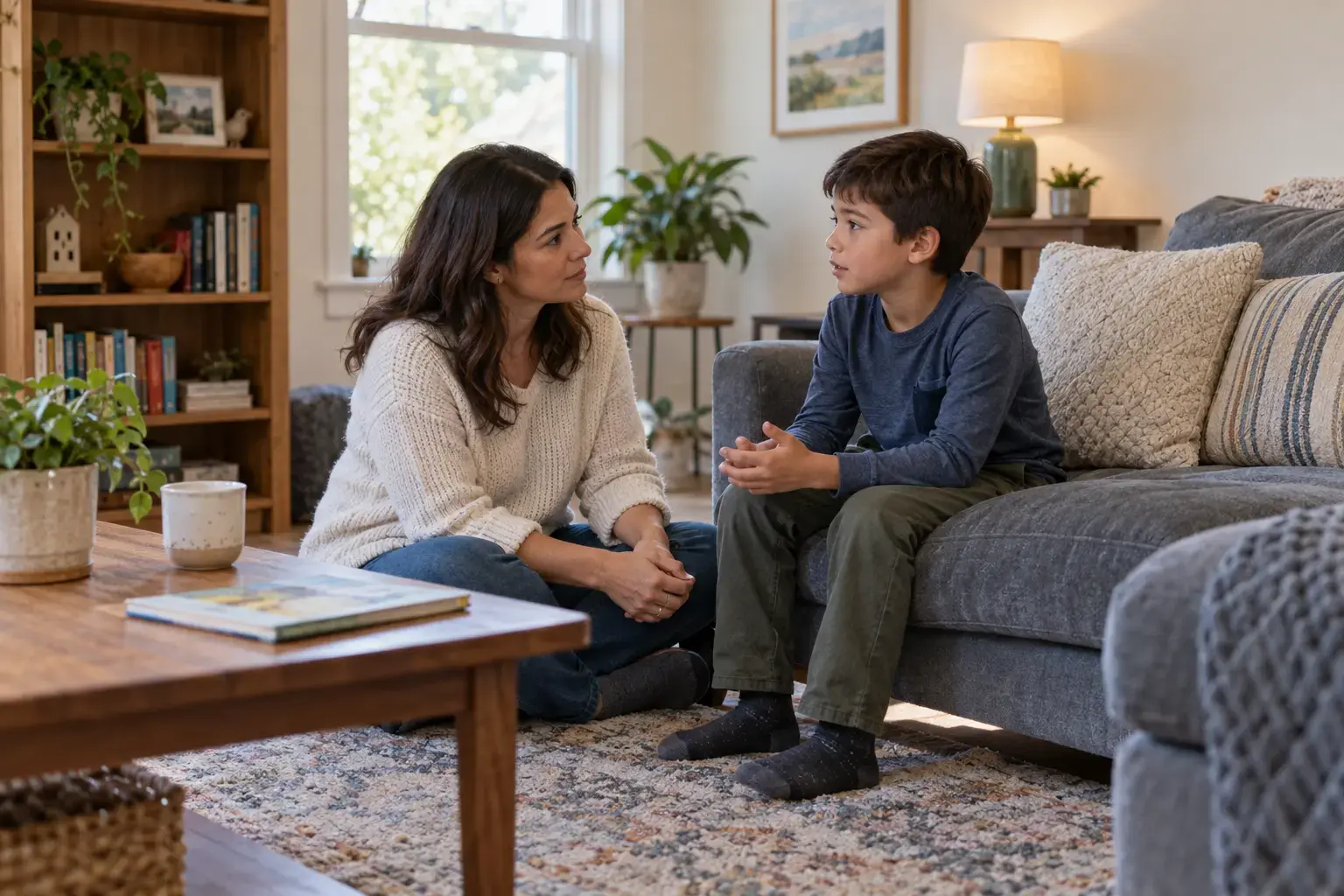
Every September, children may encounter the words “9/11” through a school announcement, a flag, a memorial ceremony, a video clip, or a conversation between adults. A child may ask a direct question, repeat something confusing, or say nothing while quietly worrying. Parents and caregivers do not need a perfect speech. They need a calm way to discover what the child already believes, give enough truthful information, and leave the door open for another conversation.
Begin With What the Child Has Heard
Before explaining, ask: “What have you heard about September 11?” and “What are you wondering?” The American Academy of Pediatrics recommends starting with what children already know. Their answer may reveal a small factual question, a frightening misunderstanding, or a concern about someone they love.
Listen without interrupting and do not force a reluctant child to talk. Some children need time, repeated conversations, drawing, play, or a quiet moment later in the day. A question asked more than once may be a request for reassurance rather than new information.
Give Simple Facts Without Graphic Detail
On September 11, 2001, terrorists took control of four passenger airplanes and attacked places in the United States. Many people were killed, and many others were injured or lost someone they loved. Firefighters, police officers, emergency workers, passengers, neighbors, and many ordinary people tried to help. Older children who want reliable historical information can use the National September 11 Memorial & Museum’s 9/11 Primer with adult guidance.
That may be enough. Children do not need every fact an adult knows. Avoid descriptions of injuries, final phone calls, people falling, bodies, or other terrifying details. If a child asks something you do not know, say so and look for a reliable answer together rather than guessing.
Match the Conversation to Development, Not Just Age
Infants and Toddlers
Babies and toddlers do not need a history lesson. Protect them from upsetting television or phone audio, keep routines familiar, and manage adult conversations within earshot. Very young children notice tension in voices and bodies even when they do not understand the words.
Preschool-Age Children
Use a few concrete sentences: “A long time ago, some people hurt many other people on purpose. Today we remember the people who died and the helpers who cared for others. You are safe with me right now.” Then stop and see whether the child has another question. Preschoolers may confuse past and present, so repeat that the event happened many years ago.
Elementary-Age Children
Offer the basic facts, clarify when and where the attacks happened, and ask what the child has seen or heard. Explain unfamiliar words such as “terrorist” without turning the conversation into a frightening lecture. Children this age may focus on practical safety questions, whether relatives were there, or why adults still feel sad.
Older Children and Tweens
Older children can handle more historical context, but graphic material is still unnecessary. Ask where their information came from, correct false claims, and distinguish facts from rumors or edited social-media clips. Let them know that thoughtful people may have different feelings and questions about war, security, grief, and remembrance.
Helpful Responses to Difficult Questions and Remarks
| What a Child Might Say | A Calm Starting Response |
|---|---|
| “Could that happen here?” | “Adults work in many ways to keep people safe. No one can promise that nothing bad will ever happen, but you are safe right now and the adults caring for you have plans for emergencies.” |
| “Why did they do it?” | “A small group believed extremist ideas and chose violence. Their actions do not represent an entire religion, country, or group of people.” |
| “I saw a scary video.” | “That image is upsetting, and you do not need to keep watching it. Tell me what you saw and what you are worried it means.” |
| “Why do we still remember it?” | “We remember the people who died, the families who were hurt, and the courage and care shown by helpers and communities.” |
Reassurance Should Be Honest
“Nothing bad will ever happen” is a promise adults cannot keep. Try: “You are safe right now. Many adults work to protect people, and I will tell you the truth and help you with your questions.”
Correct Stereotypes Clearly
Children may repeat blame directed at Muslims, Arabs, immigrants, or another broad group. Correct it directly: individuals and an extremist organization carried out the attacks; an entire religion, nationality, or community did not. The 9/11 Memorial advises adults to avoid assigning blame to whole groups and to resist stereotypes and oversimplification. A child can learn the history without learning prejudice.
Limit Repeated Images and Adult Commentary
Repeated footage can make a past event feel as if it is happening now, especially to younger children. Turn off autoplay, preview material before sharing it, and avoid leaving commemorative coverage running in the background. Older children may encounter images independently, so ask what they have seen instead of assuming they avoided it.
Adults should also notice their own tone. It is honest to say, “This makes me sad,” without asking a child to carry an adult’s fear, anger, or graphic memories. The American Academy of Child and Adolescent Psychiatry recommends predictable routines, limited exposure to upsetting images, and reassurance without unrealistic promises.
Watch for Distress That Continues
A child may be briefly sad, curious, quiet, or worried after the conversation. Extra closeness and familiar routines may be enough. Pay closer attention when fear persists, sleep changes substantially, nightmares continue, physical complaints recur, separation suddenly becomes very difficult, or distress interferes with school, childcare, relationships, or ordinary activities. Children with previous trauma or loss may react more intensely. Contact the child’s pediatrician, school counselor, or a qualified mental-health professional for individualized guidance when concerns persist or feel severe.
Coordinate What Children Hear From Adults
If a school or childcare program plans an observance, parents can ask what children will see and hear. Share relevant family connections, fears, losses, or words that help the child feel grounded. Adults do not have to use identical sentences, but consistent facts and calm reassurance reduce confusion. Families can also review JKD’s guide to supporting children through a new school year for ideas about listening, predictable routines, and the after-school transition.
Make Room for Remembrance, Helpers, and Hope
September 11 is a painful part of history, but fear does not need to be the final message. Children can learn that people helped strangers, cared for injured people, supported grieving families, and continued serving their communities. A simple act—drawing a thank-you picture for local helpers, learning about a person who helped, or doing something kind for a neighbor—can connect remembrance with compassion.
The conversation does not have to end neatly. Listen first, tell the truth in manageable pieces, protect children from images they cannot unsee, correct prejudice, and return to the subject when they are ready. A calm adult cannot erase a difficult history, but can make sure a child does not have to understand it alone.