When children learn and play together, coughs, runny noses, influenza, COVID-19, RSV, and other infections can move through families quickly. No responsible childcare program can promise an illness-free season. Families and providers can, however, reduce avoidable spread by using several practical protections consistently instead of depending on one supposed solution.
Prepare Before the First Sick Morning
The worst time to study an illness policy or arrange backup care is after a child wakes with a fever. Before respiratory illness activity increases, reread the provider’s current exclusion and return-to-care requirements. Confirm which parent or authorized adult can pick up promptly, update emergency contacts, and decide who can remain home if care is temporarily unavailable.
Keep a working thermometer and basic supplies available at home. Know how to contact your child’s pediatrician and where to obtain current public-health information. This preparation does not prevent illness, but it makes it easier to respond honestly and quickly without sending a visibly sick child into a group setting because no alternative plan exists.
Make Vaccination Decisions Early
Current CDC information for the 2026–2027 flu season says influenza vaccines are available for people age 6 months and older. For most people who need one dose, September or October is the preferred period. Some children ages 6 months through 8 years need two doses at least four weeks apart, depending on their vaccination history. Ask the child’s healthcare professional how many doses are appropriate and when to begin.
Babies younger than 6 months cannot receive a flu vaccine. Their protection depends partly on the precautions taken by the adults and older children around them. COVID-19 vaccine recommendations and access arrangements can change, so check New York State Department of Health vaccine information for updates and speak with the child’s pediatrician rather than relying on an old social-media post or last season’s instructions.
Ask About Low- or No-Cost Vaccination
Vaccination is not automatically free for every person at every location. Many insurance plans cover recommended vaccines, and New York’s federally funded Vaccines for Children program provides vaccines at no cost to eligible children. Ask your insurer, pediatrician, participating pharmacy, or local health department about eligibility, age restrictions, appointments, and possible fees.
Focus Handwashing on the Moments That Matter
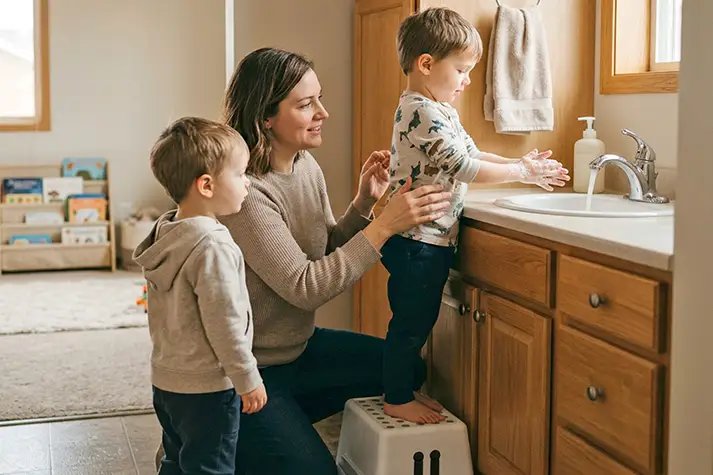
CDC guidance for early-care settings recommends washing hands with soap and water for at least 20 seconds and drying them thoroughly. Important times include before eating or handling food, after toileting or diapering, after wiping a nose, after coughing or sneezing into the hands, after contact with bodily fluids, and whenever hands are visibly dirty.
Young children need repetition and adult supervision. Teach the same simple sequence at home: wet, soap, rub every part of both hands, rinse, and dry. If soap and water are not available, CDC recommends hand sanitizer containing at least 60% alcohol. Sanitizer must be stored and used safely around young children and does not replace washing visibly dirty hands.
Teach Cough and Sneeze Habits Without Shame
Teach children to cough or sneeze into a tissue or their elbow instead of their hands, discard used tissues, and wash their hands afterward. Expect reminders. A preschooler who forgets is learning a skill, not deliberately endangering others. Calm repetition works better than embarrassment or punishment.
Understand That Cleaner Air and Cleaning Do Different Jobs
Respiratory viruses can spread through the air, while germs can also reach hands from objects and surfaces. Cleaner-air steps—such as appropriate ventilation and well-maintained filtration—help reduce particles that accumulate indoors. Regular cleaning removes dirt and germs from frequently touched surfaces. Disinfection is especially relevant when someone is sick and in situations such as diapering or contact with bodily fluids.
Constantly spraying every toy does not make a room infection-proof, and harsh products can create their own risks if misused. Childcare providers must follow product directions, applicable regulations, and safe storage practices. Families can help by keeping personal items—such as cups, water bottles, pacifiers, toothbrushes, and utensils—clearly identified and prevent them from being shared.
Keep Sick Children Home and Follow the Actual Policy
A child may have only mild symptoms yet still be unable to participate comfortably or may expose others. Monitor symptoms before drop-off and follow the childcare program’s written policy. Jasmine’s Kingdom Daycare’s current Illness Policy explains its fever, vomiting, diarrhea, contagious-illness, exclusion, and return-to-care expectations. Review the live policy rather than relying on memory.
Do not use fever-reducing medicine merely to make a child appear eligible for care. A temporarily lower temperature does not mean the illness has resolved. If a healthcare professional gives child-specific instructions, share relevant documentation with the provider and confirm that the program’s return requirements have also been met.
Keeping a sick child home is not an inconvenience imposed on other families. It is one of the most direct ways a family can protect the entire childcare community.
Communicate Early and Specifically
Tell the provider what symptoms occurred, when they began, whether fever-reducing medicine was given, and whether a healthcare professional diagnosed or tested for a contagious illness. Accurate information helps the provider follow the health plan, clean appropriately, monitor other children, and give families any notice required without identifying the sick child unnecessarily.
Families should also keep contact information current and remain reachable during care hours. If a child becomes ill at daycare, timely pickup limits the child’s discomfort and reduces additional close contact while the provider maintains supervision.
Take Extra Care Around Higher-Risk Children and Households
Some children and household members have a higher risk of severe respiratory illness because of age, pregnancy, immune suppression, or certain health conditions. Families should ask their healthcare professional which vaccinations, testing, treatment, or additional precautions apply to their situation. Seek medical care promptly when symptoms are severe, rapidly worsening, or otherwise concerning.
When respiratory illness is increasing, after a recent exposure, or while someone is recovering, CDC describes testing, physical distance, and a well-fitting mask as possible additional layers. Ask whether a mask is safe and developmentally appropriate for your child and follow the provider’s rules. A mask should never be used to send a child who otherwise meets the program’s exclusion criteria.
Use a Shared Seasonal Checklist
| When | Practical Family Action |
|---|---|
| Before the season | Review vaccination needs, the illness policy, emergency contacts, and backup-care options. |
| Every morning | Notice new symptoms and decide honestly whether the child can participate safely and comfortably. |
| Every day | Reinforce handwashing, cough etiquette, and separation of personal cups, utensils, and comfort items. |
| When illness begins | Keep the child home when required, contact the provider, and seek medical guidance when appropriate. |
| Before returning | Confirm that the child meets the written return-to-care policy without symptoms being hidden by medication. |
Aim for Fewer Preventable Exposures, Not Perfection
Respiratory illness may still enter a household or childcare program even when everyone acts responsibly. That does not make prevention pointless. Vaccination planning, staying home when sick, clean hands, cough etiquette, safer indoor air, appropriate cleaning, and honest communication each address a different part of the problem. Used together, these ordinary habits can reduce avoidable spread and help protect children, caregivers, and the people they return home to each evening.