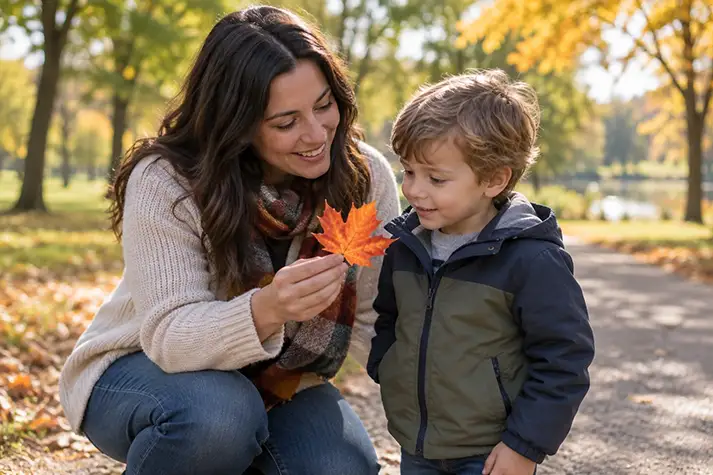
A fall walk with a child does not need a destination, a lesson plan, or a dramatic view. In Greece and greater Rochester, a neighborhood sidewalk, accessible park path, or quiet yard can offer enough to notice: a leaf with two colors, a bird call, the sound of feet on dry pavement. The best walk is one that fits the child's energy and gives everyone permission to pause. Here is a way to make those ordinary outings more engaging without turning them into another item on the family schedule.
Choose a Walk You Can Actually Enjoy
Start close to home and keep the first outing short enough that going back is easy. A stroller-friendly sidewalk may serve a family better than a wooded trail with roots and uneven ground. Before leaving, check the weather, daylight, path conditions, and where you can turn around. Comfortable shoes, a layer you can remove, water, and a simple plan for getting home matter more than elaborate equipment on a neighborhood walk. New York's Department of Environmental Conservation offers a trail finder and hiking guidance if your family wants a longer outing.
Invite the child to choose one thing to look for—something yellow, a round shape, or a sound you cannot see. The prompt is a doorway, not a checklist. If your child spends most of the walk examining one puddle, that may be the day's real discovery. The American Academy of Pediatrics reminds families that nature can be found near home; outdoor exploration need not involve traveling to a major park.
A Five-Minute Nature Walk Counts
Pick a familiar, safe route. Notice one color, one sound, and one change since the last time you passed. Let your child lead the noticing; stop when the walk stops being enjoyable. You can try again another day.
Infants: Let the World Come to Them
For a baby, an outdoor experience might be a stroller ride, a few minutes in a caregiver's arms, or time on a clean blanket with an adult beside them. Pause and describe what they notice: “The branches are moving,” or “That bird is loud.” Watch for signs that the baby needs warmth, shade, feeding, or a break. Keep small leaves, seeds, stones, and other loose items away from little hands and mouths. Outdoor floor play is for awake, supervised babies; sleep calls for a separate, safe sleep space.
Toddlers: Expect Stops, Repeats, and Detours
A toddler may be far more interested in stepping over the same crack ten times than reaching the end of the trail. Leave extra time, set a short boundary you can keep, and offer small choices: “Should we look at the tree or the grass first?” Name textures and sounds while allowing the child to make their own discoveries. If you collect a leaf, inspect it together rather than assuming every object should be carried home. Keep a firm grip near streets and driveways, and provide the supervision the setting requires.
Preschoolers: Turn Noticing Into Conversation
Preschoolers often enjoy a small mission: find two leaves that look different, listen for a bird before looking for it, or compare the shade under a tree with a sunny spot. Ask open questions such as “What do you notice?” and “How are these two leaves different?” You do not need to know every plant's name. “Let's observe it without touching” is an honest answer when you do not recognize something.
Back at home, a child might draw one remembered detail or sort a few safe, dry leaves by size. There is no need to keep everything. If a child prefers running, balancing, or talking about something unrelated to nature, let the walk stay playful. Families who enjoy books can pair the outing with JKD's guide to conversational reading, asking what the child saw outside that also appeared in the story.
School-Age Children and Tweens: Give Them Ownership
Older children may like planning a route, photographing the same tree on several walks, sketching changes, or picking one question to investigate later. A tween might prefer a quiet walk and conversation over an adult-led scavenger hunt. Offer a choice—“Should we take the short loop or walk toward the park?”—then respect the answer when practical. Side-by-side walking can make room for an unhurried conversation about school or friends; silence can be useful too.
If an older child wants to go independently, make the decision based on that child's judgment, the route, traffic, daylight, and family rules. Agree on where they may go, who they are with, and when they will return. Outdoor independence should grow from practiced skills, not a birthday alone. JKD's family emergency-information guide offers ideas for practicing contacts and meeting plans before a child ventures farther from home.
Keep Curiosity and Safety Together
Make rules simple and specific: stay with the adult, stop at crossings, leave unfamiliar plants and mushrooms alone, and watch wildlife from a distance. Be especially attentive near water and steep or slippery edges. Ask before taking objects from a shared space, follow posted rules, and leave living plants in place. When a route is rough or inaccessible, choose a smoother path; everyone should be able to participate in the way that works for them.
Fall does not remove tick risk. The CDC advises staying near the center of trails and avoiding brush and tall grass where possible. After time in tick habitat, check children and adults for ticks and examine clothing and gear. Follow current CDC guidance and product labels for repellents that are appropriate for your child's age; do not apply a repellent just because an outing is outdoors. For questions about a bite or symptoms, contact a healthcare professional.
Make It Easy to Go Again
When you come home, ask one gentle question: “What did you notice today?” The answer might be a leaf, a dog, a funny cloud, or nothing at all. Avoid turning the walk into a quiz. Notice what made it pleasant and what got in the way. Next time you can leave earlier, take a shorter route, or bring a warm layer.
A familiar place changes week by week. Returning to the same block, tree, or patch of sky helps children see that nature is part of everyday life in Greece and throughout the Rochester area. One curious pause may give your family more to talk about than a perfectly planned afternoon. Let that be enough.