In Greece and greater Rochester, a power outage can interrupt heat, lights, cooking, phone charging, and the small routines children count on. A family plan does not need to predict every storm. It needs to answer a few practical questions before the lights go out: What will we use first? How will we stay warm and fed? When will we leave for a safer place?
Set up one easy-to-find outage kit
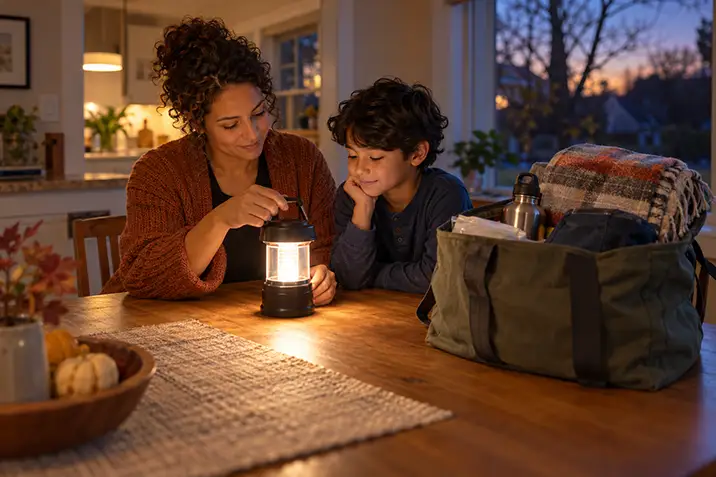
Monroe County recommends a family communication plan and enough basic necessities for roughly three days. Start with what you can manage, then add to it. Put flashlights or battery lanterns, spare batteries, a charged power bank, a battery or hand-crank radio, a manual can opener, drinking water, ready-to-eat food, necessary medicines, and a paper contact list where an adult can find them in the dark. Include a change of clothes and warm layers if you might need to leave home. Keep the kit accessible without making batteries, medicines, or other unsafe items available to young children.
Make a smaller bag for the items that are hard to replace quickly: diapers and wipes, infant feeding supplies, a comfort object, copies of essential information, glasses, and any equipment a family member needs. If someone depends on an electrically powered medical device or a temperature-sensitive medicine, make an individual backup plan with the relevant clinician and utility before an outage. A generic checklist cannot settle those needs.
Decide who to contact and where to go
Choose one nearby person and one contact outside the immediate area who can receive a short update if local calls are difficult. Write the numbers down; a phone with a dead battery cannot retrieve them. Agree on a nearby place to meet if family members must leave the home, and a second place to go for heat or electricity if the outage lasts. Check whether that location is actually available before traveling, especially during bad weather. Families can also sign up for Monroe County's MonroeAlert and monitor utility and county notices.
Report an outage to your utility. Monroe County's financial assistance page lists utility contacts and after-hours help for no heat or utilities. Reserve 911 for immediate danger, such as a downed wire near people, a suspected fire, or a carbon monoxide alarm. Treat every fallen power line as energized: keep children away and follow instructions from the utility and emergency responders.
Keep warmth and light safe
Use flashlights or battery lanterns for light. Candles add a fire hazard, particularly around curious children, pets, and a crowded room. If heat stops working, use dry layers and blankets while awake, close off unused rooms if appropriate, and watch how quickly the home cools. An infant or a child with additional health needs may require a quicker move to a reliably heated location. For infant sleep, keep the usual safe sleep space clear of loose blankets and use appropriate sleep clothing or a wearable blanket instead.
Never use fuel-burning equipment for indoor heat
Do not heat a home with a gas oven, charcoal grill, or outdoor stove. Operate a generator only outdoors, well away from windows, doors, vents, and garages, following its instructions and current safety guidance. Keep working carbon monoxide alarms with battery backup. If an alarm sounds or you suspect carbon monoxide exposure, get everyone to fresh air and call 911.
Do not wait for a precise indoor temperature rule to make a decision. If you cannot keep the space safe and comfortably warm, or a child's needs cannot be met there, leave for a verified heated place when travel is safe. The American Academy of Pediatrics notes that infants are especially vulnerable to cold and that unsafe substitute heat can be more dangerous than the outage itself.
Protect food, water, and infant feeding
Keep refrigerator and freezer doors closed. FoodSafety.gov says an unopened refrigerator generally keeps food cold for about four hours; a full freezer for about 48 hours, or about 24 hours if half full. Those are planning estimates, not permission to serve food that is warm. An appliance thermometer helps you check temperatures. Follow FoodSafety.gov's food-specific chart afterward, and do not taste food to decide whether it is safe.
For a formula-fed baby, consider keeping unopened, single-serving ready-to-feed formula in the emergency supplies if it fits the baby's feeding plan. The CDC says it does not require water for mixing and is the safest formula option during an emergency. Powdered formula requires safe water and clean preparation supplies. If you express milk, think ahead about how you would pump and keep milk safe without electricity. Follow the CDC's emergency infant-feeding guidance and ask your child's clinician about individual needs.
An electrical outage does not automatically mean tap water is unsafe. If local authorities issue a water advisory, follow that specific notice. Keep a supply of drinking water so one problem does not become two. Set aside familiar shelf-stable foods that your children can actually eat, with attention to allergies and age-appropriate choking precautions.
Give children a role without giving them the risk
Babies need adults to keep feeding, warmth, and sleep as steady as possible. Toddlers can carry a favorite toy or help find a flashlight with an adult. Preschoolers may like a simple explanation: “The lights are off. The grown-ups have a plan.” School-age children can help check the kit, read a paper contact list, or choose a quiet game. Older children can practice sending a brief check-in message and help younger siblings stay occupied. Adults remain responsible for generators, candles, electrical panels, food decisions, and whether to travel.
A small routine can make the disruption easier to handle: eat a familiar snack, play a card game, read by lantern, and explain what is known without promising when service will return. If children are at school or in child care when an outage occurs, use that setting's communication and pickup instructions. JKD families can review the site's age-by-age emergency information guide for ideas about names, contacts, and meeting places.
Revisit the plan before the next outage
Once power returns, recharge devices, replace used supplies, and check food temperatures before saving perishables. Then ask what was awkward: Was the flashlight buried? Did the power bank work? Did everyone know whom to call? Adjust one or two things at a time. A useful plan is one your family can follow on an ordinary dark evening, even when everyone is tired.