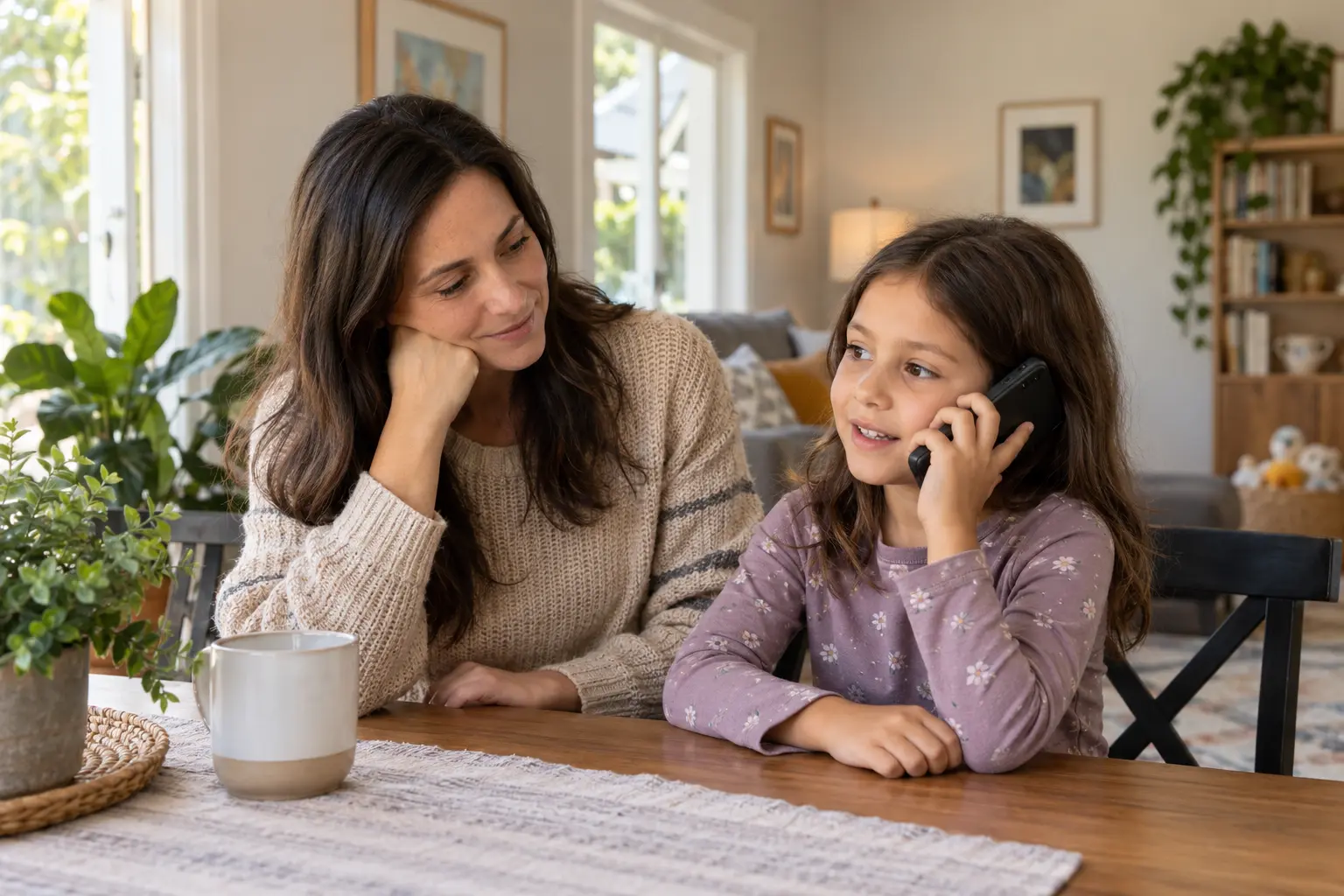
A child who becomes separated from a caregiver, sees smoke, or finds an adult who is badly hurt may need to communicate before a familiar grown-up can take over. That does not mean children need frightening lectures or responsibility beyond their age. It means families can build a few practical skills gradually: knowing important names and numbers, recognizing when to call 911, describing a location, and understanding where the family will reconnect.
Preparedness Is a Family Skill, Not a Test
The New York State Division of Homeland Security and Emergency Services recommends making and practicing a household emergency plan. The purpose of practice is familiarity. A child may remember more when the information appears in short conversations, games, songs, and occasional rehearsals than when an adult delivers one serious lesson and expects perfect recall.
Children develop at different rates. Speech, memory, mobility, communication needs, disability, anxiety, and experience all affect what a child can do independently. Use age ranges as a starting point, not a deadline. Adults remain responsible for maintaining current records, supervising young children, and making the larger plan.
What to Practice at Different Ages
Infants and Toddlers: Prepare the Adults
Babies and young toddlers cannot manage an emergency plan. The useful work happens around them. Keep caregiver contact information current wherever the child regularly spends time. Make sure authorized adults know about essential communication, mobility, medical, comfort, or feeding needs. Include diapers, formula or feeding supplies, medications, comfort items, and needed equipment in household planning.
New York State guidance specifically notes that infants and people with access or functional needs may require additional supplies and assistance. The state’s preparedness guidance asks families to plan for individual needs and identify trusted people who can help. Toddlers can begin learning their first and last name and the names they use for their caregivers, but adults should not depend on that memory in an emergency.
Preschoolers: Names, Helpers, and the Meaning of 911
Many preschoolers can practice saying their full name, a parent or caregiver’s full name, and their town. Some can begin learning a street address or phone number in small pieces. They can also learn one simple distinction: 911 is for an emergency when someone needs police, firefighters, or an ambulance right away—not for a lost toy, a minor disagreement, or practice.
Use pretend play rather than placing a real call. A toy phone, paper keypad, or powered-off device lets a child rehearse saying: “My name is ___. I am at ___. The emergency is ___.” Teach the child to listen, answer the call-taker’s questions as well as they can, and stay on the line unless told to leave because the location is unsafe. Never scold a child for being unsure during practice; correct the information calmly and try again another day.
Elementary-Age Children: Add Location and Contacts
School-age children can work toward knowing their complete home address, at least one caregiver phone number, and the name and number of a backup emergency contact. They should understand that their location may be somewhere other than home. Practice noticing a street name, house number, store name, apartment number, school, park sign, or nearby landmark that could help explain where they are.
Also teach what to do if a call drops: try 911 again if it is still safe and the emergency continues. Do not promise that a phone will always show dispatchers the caller’s exact location. The safer habit is to say the location aloud whenever possible.
Older Children and Tweens: Practice the Whole Communication Plan
Older children can help review the family plan and notice gaps. They can learn the two meeting places, the out-of-area contact, how to reach a caregiver if their own phone is unavailable, and which adult will pick them up if normal plans change. They should know that an emergency plan is private family information—not something to post publicly or share casually online.
A tween may be capable of more, but capability should not become an expectation to manage younger siblings or a crisis alone. Their job is to follow the plan, seek help, communicate clearly, and move to safety. Adults still make the major decisions.
Five Facts to Practice
- The child’s full name.
- A caregiver’s full name and phone number.
- The home address, including apartment number when applicable.
- What counts as a 911 emergency and what to say first.
- The family’s nearby and out-of-neighborhood meeting places.
Teach 911 Without Creating Fear
The National 911 Program directs people to call 911 for emergency assistance. Children need concrete examples, but graphic scenarios are unnecessary. Try: “Call 911 if there is a fire, someone is badly hurt or cannot wake up, or you are in immediate danger and no safe adult is already helping.” Then contrast those examples with everyday problems that should go to a caregiver.
Make clear that children should never hang up because they feel embarrassed or think they made a mistake. They should tell the call-taker what happened and follow instructions. Accidental calls should not be used as practice. If your local public-safety agency offers a scheduled educational demonstration, families can use that opportunity to see how local calls are handled without tying up an emergency line.
Create Two Meeting Places and One Backup Contact
New York State recommends choosing one meeting place near home for a household emergency and another outside the neighborhood when returning home is not possible. It also recommends an out-of-town check-in contact. The New York State Office of Mental Health advises households to decide how they will reconnect when phones or power are unavailable and to practice the plan together.
Choose places a child can recognize and reach only when age and circumstances make that safe. “By the large tree across the street” is too vague if there are several similar trees. “Beside the blue mailbox at Aunt Rosa’s house” may be clearer. Revisit the plan after a move, phone-number change, school change, custody change, or change in who is authorized to pick up the child.
Keep a Paper Backup Without Advertising Private Details
Phones lose power, numbers change, and children forget under stress. Keep a printed family contact list in a known place at home. A young child may carry a discreet emergency card inside a backpack or wallet when appropriate, but do not display the child’s address or phone number on the outside of a bag. Schools and childcare providers should receive updated information through their established records rather than relying on the child to explain every detail.
Federal Ready Kids resources encourage families to involve children in preparedness. Participation can be simple: let a child help choose a meeting-place picture, point to the emergency contact on the list, or practice the plan during an ordinary afternoon. Familiarity is more useful than a surprise drill designed to frighten or trick them.
Coordinate With School and Childcare
Ask each school or childcare provider how families are contacted, where children may be relocated, how authorized pick-ups are verified, and how emergency information should be updated. Share communication, mobility, medical, or sensory needs through the program’s normal process. Do not assume that the family’s home plan and the provider’s emergency procedures are identical.
JKD families can review the current Parent Handbook, health and safety information, and Parent Information Center, then ask Jenny directly about information that is specific to their child. Written pages are a starting point; current instructions and individual details still need direct confirmation.
Use a Ten-Minute Practice
Keep rehearsal short. Ask the child to say their full name, identify one emergency example, state the first information they would give a 911 call-taker, and point out the nearby meeting place. Older children can add the backup contact and out-of-neighborhood location. Finish by reminding them that adults are responsible for keeping them safe and that asking for help is the right action.
A child may know an answer one day and forget it the next. That is not failure. Repeat the information without shame, update it when life changes, and adjust the plan to the child’s actual abilities. Calm preparation cannot prevent every emergency, but it can give children and adults a clearer first step when ordinary routines suddenly change.