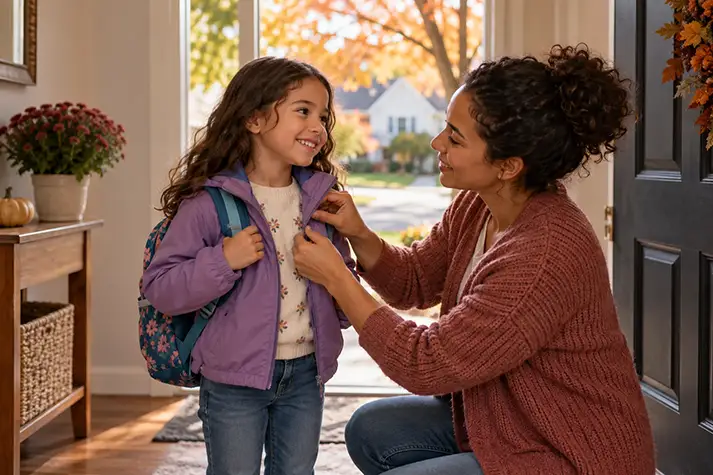
A Greece, NY morning can call for a hat and jacket, while the same afternoon feels comfortable in a lighter layer. On the evening of October 18, the National Weather Service had a frost advisory for the Rochester area early Monday, October 19, followed by a forecast high near 65°F. That swing is a useful reminder: the best fall outfit for a child is one that can change during the day.
Dress for the Whole Day, Not Just the Doorstep
Before leaving home, check the forecast for the hours your child will actually be outside: the morning walk, afternoon playground, ride home, or evening activity. Temperature matters, but so do wind, rain, and wet ground. A cool, dry morning calls for a different outfit than a breezy afternoon with damp leaves. Local forecasts change, so use the National Weather Service Rochester forecast as a same-day check rather than treating one weekly prediction as a clothing rule.
Think in three parts: a comfortable layer against the skin, an optional warmer layer, and an outer layer for wind or rain when needed. Thin layers are easier to remove than one heavy garment. For a child who will move between a warm building and the outdoors, make the middle layer simple to take off without removing everything else. A zippered sweatshirt, for example, may be easier for a young child to manage than a bulky pullover. Check that sleeves do not cover hands during play and that pant legs do not drag.
The Two-Check Routine
Before leaving, check the forecast for the child’s outdoor hours and pack one removable layer. Later, check the child rather than relying only on the thermometer: are clothes damp, is the child uncomfortable, or is a heavy layer still on after the day warms? Adjust and keep the spare item available for the trip home.
Babies and Toddlers Need a Different Check
The American Academy of Pediatrics offers a general rule of thumb: older babies and young children may need one more layer than an adult would wear in the same conditions. It is a starting point, not an instruction to keep every child bundled all day. A baby in a stroller is not producing heat through running around; a toddler chasing leaves may warm up quickly. Look at the child’s comfort and activity, then remove or add a layer as the setting changes.
Keep a baby’s face unobstructed. For a stroller walk, use clothes and a removable blanket that an adult can monitor, rather than covering the stroller with a heavy fabric that traps heat or blocks your view. A toddler learning to dress can practice pulling on a hat or pushing an arm through a sleeve. Give enough time for that attempt, then help with the part that is frustrating. Clothing should let the child climb, sit, and walk without tangling around feet or hands.
Preschoolers and School-Age Children Can Help Plan
For preschoolers, offer two workable choices: “Do you want the purple sweatshirt or the blue one?” A child can learn that a jacket goes on for the chilly walk and comes off inside. Put their name on removable items if they will be carried between places, and show them where a spare layer belongs. That small routine is more useful than a long argument at the door.
Older children and tweens can compare the morning low with the afternoon high and decide what to carry. Ask them to think about the day’s actual activities: waiting at a bus stop, walking between buildings, playing outside, or heading to a sports practice. A lightweight jacket they can tie around a waist or put in a bag gives them a way to respond as conditions change. If they refuse a layer on a cool but safe day, a calm reminder that it is in their bag may teach more than a contest over the forecast.
Keep the Car Seat Harness Snug
A puffy coat can look like a smart choice for a cold driveway, yet its padding may compress in a crash and leave a child’s car-seat harness loose. The AAP and National Highway Traffic Safety Administration advise using thin, close-fitting layers under the harness. Buckle and tighten the harness as directed by the seat manufacturer; then place a coat or blanket over the straps if warmth is needed. Remove that top layer if the car warms up and the child gets hot. Do not put bulky inserts or a blanket between the child and the harness.
This clothing point is only one part of car travel. JKD’s car seats, boosters, and seat belts guide covers the broader parent check. Follow the instructions for your specific seat and vehicle, especially if you are uncertain whether an accessory can be used safely.
Plan for Wet Clothes and Changing Plans
The AAP notes that wet clothes can make cold exposure more serious. In everyday fall weather, a spare pair of socks and a dry top can save an outing or a trip home after puddles, drizzle, or an enthusiastic playground session. Shoes should fit securely and suit the surface; a waterproof shoe helps only if the child can still walk and run comfortably in it. Check mittens and cuffs after play, because a damp layer against skin is less useful than a dry, lighter one.
Outdoor time does not require perfect weather or expensive gear. Choose a shorter walk, stay near home, or head inside to change if a child becomes too cold or soaked. Watch for unusual lethargy, confusion, or other concerning symptoms after significant cold exposure and seek prompt medical help. This guide cannot assess a particular child’s symptoms. For a gentler autumn outing, JKD’s fall nature walk ideas can help families choose a manageable route and pace.
Make Tomorrow Morning Easier Tonight
Lay out the comfortable base outfit and put the optional layer nearby. Keep a small bag for a wet item so it does not soak the dry spare. If another adult handles pickup, tell them which layer is available. In a Greece fall, the forecast may change several times in one week; a repeatable system is more helpful than a perfect outfit selected the night before. Check the morning conditions, send the removable layer, and let the child’s comfort guide the next adjustment.