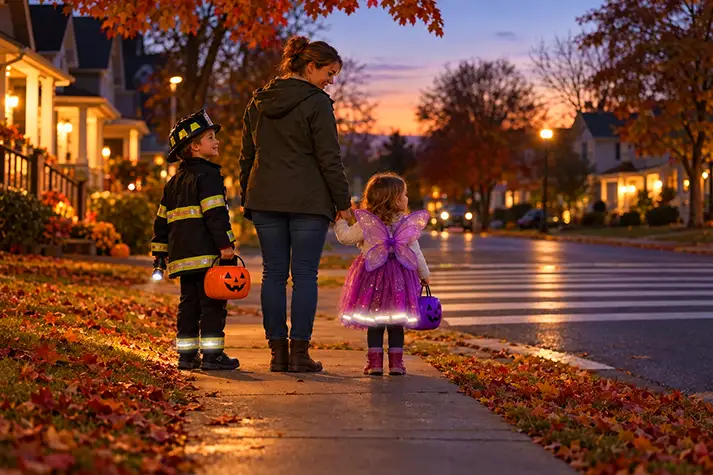
Halloween can be a wonderful neighborhood walk: familiar streets look different, children practice greeting people, and everyone comes home with stories. In Greece and greater Rochester, the most useful preparation happens before costumes go on. Pick a manageable route, agree on crossing rules, and decide how treats will be checked at home. A little planning leaves more room for the fun.
Plan the Walk Before You Leave
Walk the route in daylight if it is unfamiliar. Favor sidewalks, familiar crossings, and well-lit blocks. Decide where to turn around so a tired child does not have to make the longest walk at the end. Check the forecast and any current neighborhood or municipal announcements on the day; this guide does not assume a townwide trick-or-treat time. Monroe County is highlighting pedestrian safety throughout October 2026, including education at Halloween events. Its basic advice applies on every neighborhood street: use designated crossings, wear bright or reflective clothing, and watch turning vehicles.
Young children need an adult alongside them. An infant or toddler may be happier visiting just a few doors early, watching from a stroller, or staying home to greet visitors. Preschoolers often need a simple rule they can repeat: “Stop at the edge, hold hands, look together, then cross.” Choose one adult to stay next to a child who may bolt when excited. Older children who are ready to go with friends need a specific route, a group or buddy, a return time, a charged way to contact home if available, and a plan for what to do if the group separates. Readiness depends on the child and the route, not a single birthday.
Five-Minute Family Plan
Name the route and turnaround point; agree who stays with each young child; practice one safe crossing; check costume visibility and shoes; and tell children that treats wait until an adult has checked them at home. For older children, add a return time and what to do if a phone fails or the group splits up.
Make Crossings the Main Safety Habit
Halloween brings children onto streets at dusk and after dark, sometimes between parked cars or near driveways. Cross at corners or marked crosswalks when available, obey signals, and look left, right, and left again. Watch for vehicles turning even after a driver seems to have noticed you. Do not cross mid-block to reach an exciting porch, and do not step out from between parked vehicles. NHTSA also asks drivers to slow down and scan for children in unexpected places. If you are driving between celebrations, give yourself time and keep your attention on the road.
Use sidewalks where they exist. Where there is no sidewalk, walk on the far edge facing traffic and choose another route if a road feels too busy or poorly lit. A flashlight helps the group see its path; reflective tape on a costume or treat bag helps others see the child. These are useful together. Phones can wait during crossings. Ask children to stop walking if they need to read a message, adjust a costume, or look at a map.
Test the Costume on a Real Walk
Have the child walk up steps, bend, hold a treat bag, and turn their head while wearing the full costume. Shorten a dragging hem, choose shoes that stay on, and remove accessories that block vision or could hurt someone if the child trips. The American Academy of Pediatrics suggests bright and reflective elements, non-toxic makeup or hats in place of vision-blocking masks, and checking costume and accessory labels for flame resistance. Test makeup on a small patch of skin ahead of time. Decorative contact lenses need an eye-care professional’s examination and prescription.
Rochester-area evenings can feel different from a warm afternoon. Choose layers that fit under the costume without turning it into a tripping hazard, and be willing to switch to a coat or shorten the route. For a baby or toddler, comfort and an ordinary sleep routine matter more than keeping a costume on for a photograph. If a child finds crowds, doorbells, or masks overwhelming, a quieter doorstep visit or a celebration at home is still Halloween.
Set Clear Boundaries for Doors and Groups
Visit homes with lights on and a clear path. Children should stay outside and with their adult or group; they should not enter a home or vehicle for a treat. Decide in advance whom they can ask for help if they are lost. For a tween going with friends, walk through an ordinary scenario: “If one friend wants to take a different street, what will your group do?” A shared plan is easier to follow than an instruction shouted as everyone heads out.
If you are welcoming visitors, clear wet leaves, toys, cords, and other obstacles from steps and paths; turn on the porch light; and keep pets away from the door. Use a battery-operated light in a pumpkin near the walkway. These small changes also help younger visitors and families using strollers or mobility aids.
Check Treats Without Frightening Children
A snack before leaving can make it easier to wait until home to eat. Once back, sort treats together in good light. The FDA advises checking commercially wrapped candy for torn wrappers or unusual appearance and discarding anything questionable. This is a routine food check, not a reason to tell children frightening stories about strangers. Set aside treats a child cannot safely eat and explain the family’s candy plan in ordinary language.
For a child with a food allergy, read the individual label each time rather than relying on a familiar brand or a bowl’s appearance. Follow the child’s established care plan and make sure the supervising adult has the prescribed emergency medicine when applicable. Nonfood treats can make the evening more inclusive, but small toys can also be choking hazards for very young children. Remove gum, hard candy, whole nuts, small sweets, and tiny toys from a young child’s bag. The FDA and AAP both call attention to those risks.
Let the Plan Serve the Child
Some families love a long route; others enjoy ten minutes and head home. A child who is tired, cold, or uneasy can leave early without the evening being a failure. Before bed, ask which part felt fun and what they would change next time. That conversation turns a busy night into a chance to practice judgment together. For more family safety planning, see JKD’s age-by-age emergency information guide; for an outdoor activity at a gentler pace, try the fall nature walk guide.