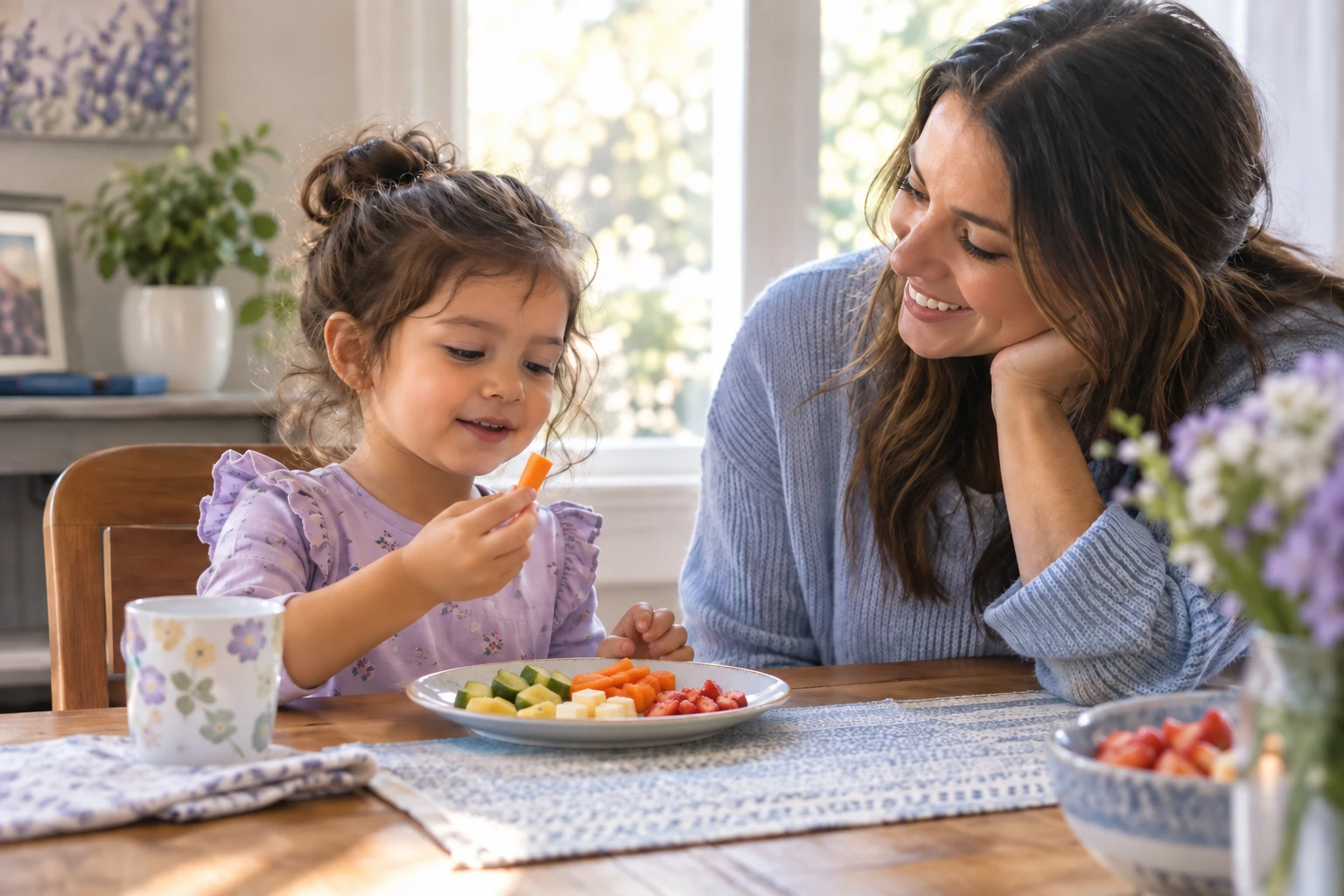
A toddler who happily ate peas yesterday may push them away today. A preschooler may insist that two foods cannot touch. Those changing preferences can be frustrating when a family is trying to make dinner, limit waste, and help a child eat well. Yet a refused bite is not necessarily a verdict on the food—or a reason to turn the table into a contest. Calm routines, small opportunities to explore, and attention to genuine safety concerns are more useful than winning one meal.
First, Understand What May Be Ordinary
Selective eating often appears as young children become more independent. The CDC notes that children may refuse foods they formerly liked, prefer only a few foods for a period, or dislike foods touching. These behaviors often change over time. That does not mean every feeding difficulty should be dismissed; it means one awkward dinner is a poor measure of a child’s overall health.
Look at patterns rather than counting bites at a single meal. What foods and drinks does the child accept across several days? Are they growing and participating as usual? Does eating appear comfortable? Keep questions about growth, nutrition, persistent distress, or swallowing for the child’s healthcare professional. This article cannot assess any individual child.
Make the Adult and Child Roles Clear
Adults decide what food is offered, when and where the family eats, and how to make the meal safe. Children can be given room to decide whether to eat from the offered foods and how much their appetite allows. The American Academy of Pediatrics advises parents not to pressure preschoolers to eat or clean their plates. This is not the same as serving only whatever the child demands; it is a way to preserve structure without forcing a bite.
A helpful plate can include at least one familiar, appropriate food alongside a small amount of something less familiar. There is no need to prepare an elaborate separate dinner every time a child declines a new item. If resources are tight, tiny portions, leftovers, and frozen produce can make exploration less wasteful. Remember that tastes, textures, and staple foods vary across families; a culturally familiar meal can be a reassuring starting point.
Let Exploration Count
On September 11, 2026, the AAP described low-pressure ways for children to explore food: choosing at the store, touching or smelling at snack time, sharing a familiar and a new food at a meal, and praising curiosity rather than how much was eaten. A child might first look, stir, smell, touch, or describe a food without tasting it. Those steps still build familiarity.
Try neutral language: “This is a roasted carrot. It is soft and a little sweet,” rather than “You have to take one bite.” Invite a choice between two reasonable options, such as which fruit to put beside lunch. If the child says no, answer simply and move on. Repeated calm offerings are more useful than a long sales pitch. A child does not have to like every food, and an adult need not conceal an ingredient or promise that it tastes like a favorite.
When a New Food Is Refused
- Keep the response brief: “Okay, you can leave it.”
- Allow the child to eat from the other offered foods.
- Notice the next opportunity to offer a small portion without pressure.
- Ask about any ongoing concern, pain, or difficulty swallowing rather than treating it as defiance.
Keep a Predictable Eating Rhythm
A reasonably regular pattern of meals and snacks can help children arrive at the table ready to eat. If a child grazes all afternoon or fills up on drinks right before dinner, hunger at dinner may be low. Avoid turning this into a rigid clock or withholding food as punishment: family work hours, childcare schedules, illness, and individual appetite all matter. Instead, notice the timing of ordinary snacks and ask whether the rhythm is working for your household.
Make eating a pleasant time to connect. Sit together when possible, put distracting media aside, and let a short meal be enough for a young child. Comments about the day, a silly food description, or an opportunity to help put a napkin on the table can create familiarity without making every minute about consumption. If an adult is anxious about food, taking a breath before the meal can help keep that anxiety from becoming the child’s job.
Avoid Bargains, Bribes, and Labels
“Three bites and you get dessert” can turn the less-liked food into an obstacle and dessert into a prize. Calling a child “the picky one” in front of them can make a changing preference sound like a fixed identity. Instead, describe what is happening today: “You do not want this right now.” Offer food fairly and keep the conversation focused on the meal rather than a moral ranking of “good” and “bad” children or foods.
One parent may find that cheerful play helps, while another child dislikes faces made from food. Follow the child’s response. Curiosity should be invited, not demanded. If a mealtime routinely becomes a lengthy standoff, simplify the expectations and speak with the pediatrician about the pattern.
Match Food to the Child’s Eating Skills and Safety
Food exploration must be safe. The CDC recommends preparing food in an age-appropriate shape, size, and texture, having young children sit upright, and watching them closely while they eat. Whole grapes, large chunks of food, hard items, and other potential hazards require careful preparation or avoidance for a child who cannot manage them safely. A child should not walk, play, or ride in a car while eating. Ask a healthcare professional for individualized help when chewing or swallowing is a concern.
Allergies and medically prescribed diets are different from preferences. Share confirmed restrictions and written instructions with every caregiver; do not ask a child to “try just a little” of an allergen or independently change a healthcare plan. If a child has coughing or choking with meals, pain, frequent gagging or vomiting, weight or growth concerns, or an extremely narrow set of accepted foods, bring those observations to the pediatrician. Urgent breathing difficulty or a severe allergic reaction needs immediate emergency care.
Coordinate Across Home and Childcare
Families can tell a childcare provider about the child’s accepted foods, known allergies, texture needs, and any written guidance from a clinician. Ask what the child actually eats during care rather than assuming their behavior is the same everywhere. Some children eat differently when peers are nearby; others need a quieter routine. Observations can help adults communicate without turning the child’s plate into a daily report card.
JKD families can review the published meals and nutrition information, health and safety page, and Parent Handbook to understand the program’s current written information, then ask Jenny directly about a child’s particular needs. Do not assume that a specific meal, substitution, or accommodation is available without confirmation. Families may also find age-appropriate ways to let children help with household routines.
Look for Progress Beyond a Finished Plate
A calm meal can be a success even if the new food stays untouched. A child who helped choose it, tolerated it on the table, or described its texture has had another low-pressure encounter. Keep offering a varied set of suitable foods, listen to the child’s cues, and treat safety or persistent nutritional concerns seriously. The aim is not to produce a preschooler who eats everything. It is to build a relationship with food that allows curiosity, comfort, and honest conversation over time.