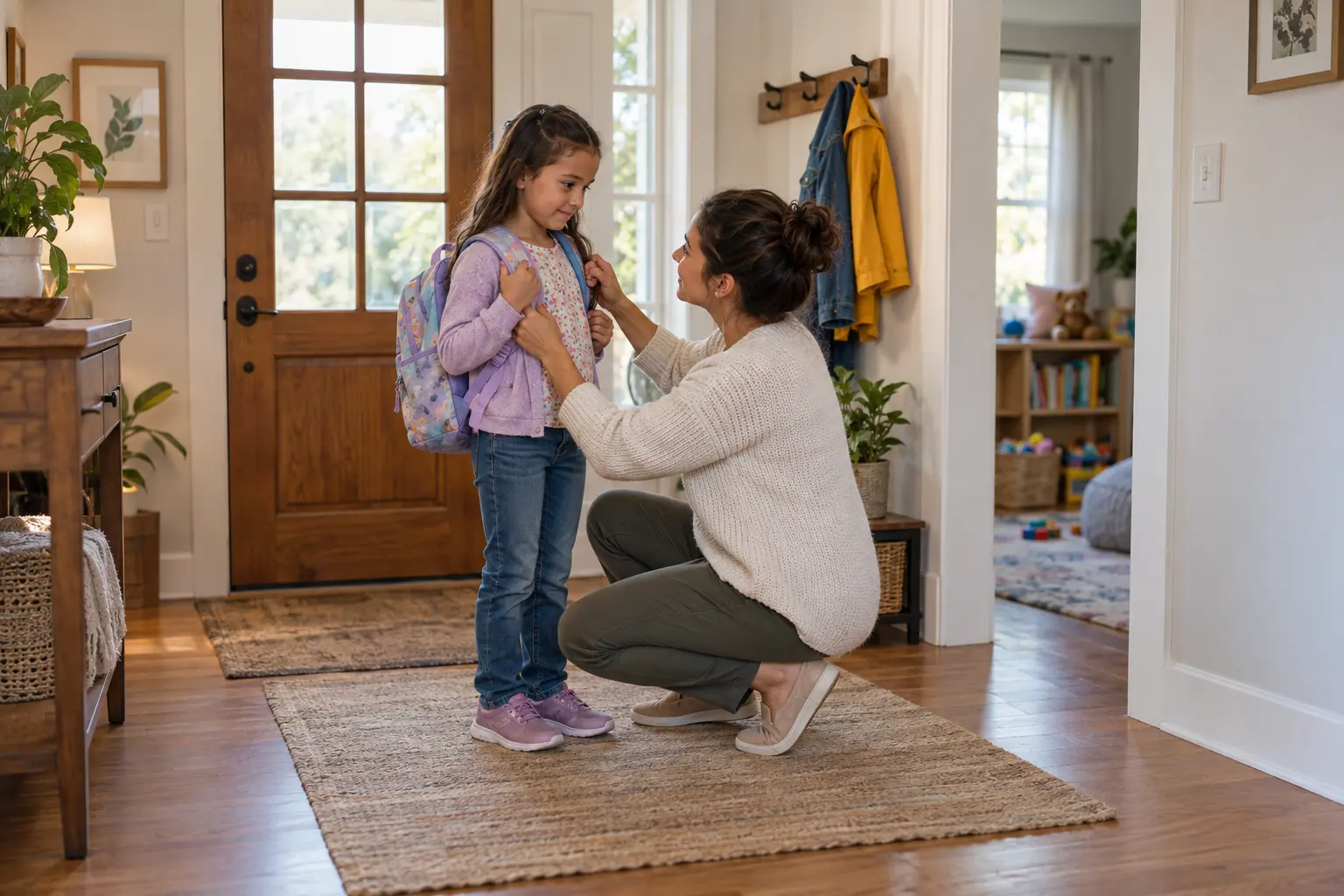
September 8 marks the first day of school for PreK–12 students in the Greece Central School District. Across the community, that one date represents many different beginnings: a child entering a classroom for the first time, a returning student eager to compare summer stories, a middle schooler navigating a larger world, or an older sibling starting a final year before work, training, another school, or college. Whatever the milestone, children rarely need a perfect first day. They need adults who make the next step feel understandable.
A First School Day Begins Long Before Kindergarten
School readiness is broader than knowing letters, numbers, or how to hold a pencil. The federal Head Start school-readiness resources describe physical, cognitive, social, and emotional development as essential elements. Young children also practice waiting briefly, following a familiar routine, asking an adult for help, caring for belongings, listening in a group, and recovering when something does not go as planned.
A nurturing home daycare can support those foundations through ordinary days filled with conversation, play, movement, stories, shared meals, transitions, and caring relationships. That does not mean every child must reach school with the same skills or temperament. Readiness grows over time, and a child who needs reassurance, extra practice, or individualized support is not starting from behind.
Make the Morning Predictable, Not Elaborate
On a busy school morning, fewer decisions usually mean less friction. Prepare what can be prepared the night before, then keep the morning sequence short enough to repeat. The American Academy of Pediatrics recommends easing first-day stress by planning ahead, arriving early when possible, and returning to consistent sleep routines. Families can also revisit JKD’s school-year sleep routine guide when late summer bedtimes are still affecting mornings.
| Before Bed | In the Morning | After School |
|---|---|---|
| Choose clothes, check the backpack, and confirm transportation or care plans. | Follow the same basic order for waking, dressing, breakfast, and leaving. | Offer water, a snack if appropriate, and a little breathing room before questions. |
| Place shoes, outerwear, and needed items in one reliable location. | Build in a small time cushion so one missing item does not become a crisis. | Ask one specific, low-pressure question instead of requesting a full report immediately. |
Let children handle age-appropriate parts of the routine, but do not place the whole morning on their shoulders. A younger child might carry the backpack to the door. An older child might use a short checklist. Adult preparation creates the structure in which independence can grow.
Take First-Day Anxiety Seriously Without Letting It Lead
Nervousness about a new teacher, classroom, bus, schedule, or peer group is understandable. The AAP’s back-to-school guidance suggests asking what worries the child and helping them think through the new situation. Listen before rushing to solve it. “You are wondering who you will sit with” is more helpful than “There is nothing to worry about.”
A Calm First-Day Message
“A new day can feel exciting and nervous at the same time. Your teacher will show you what comes next. You can ask for help, and I will be ready to hear about your day when we are together again.”
Give concrete information the child can rely on: who will take them, where the goodbye happens, who will meet them afterward, and what the evening will look like. Avoid promising that nothing uncomfortable will happen or that the day will be wonderful. Confidence grows when adults are truthful and steady, not when they guarantee an outcome they cannot control.
If fear becomes persistent or extreme, causes frequent physical complaints, or substantially interferes with school attendance or daily life, contact the child’s pediatrician or school support team. The CDC’s children’s mental health guidance distinguishes ordinary fears from concerns that may need evaluation and individualized help.
Welcome Old Friends and Make Space for New Ones
Returning students may be eager to reconnect and hear what friends did over the summer. Others may discover that friendships shifted, classmates are in different rooms, or a familiar friend has moved away. Remind children that they can enjoy old friendships while remaining open to someone new. Simple conversation starters—“What did you like doing this summer?” or “Do you want to sit together?”—can make connection feel more possible.
Do not pressure a quiet child to make a best friend immediately. A smile, a shared activity, learning one classmate’s name, or asking one question can be meaningful progress. Head Start notes that caring relationships and social-emotional skills support making friends, understanding feelings, managing strong emotions, and solving problems. These abilities keep developing well beyond the first day.
Leave Room for the After-School Landing
A child who held everything together at school may come home talkative, silent, silly, tearful, hungry, or irritable. That reaction does not automatically mean the day went badly. School requires attention, flexibility, memory, social effort, and repeated transitions. Offer a calm reunion and meet immediate physical needs before expecting a detailed conversation.
- Begin with connection: “I’m glad to see you.”
- Offer a familiar snack, water, movement, or quiet time as appropriate.
- Ask something specific, such as “What was one thing that surprised you?”
- Accept “I don’t know” and try again later during dinner, play, or bedtime.
- Share necessary school and childcare information between adults so the child does not have to manage the handoff.
A Final School Year Is a Beginning Too
For families with an older student beginning a final year, the first day may carry pride, nostalgia, and uncertainty all at once. Some young people are already thinking about a job, training, another school, or a far-away college; others are not ready to decide. Parents can help by staying curious, breaking large decisions into smaller next steps, and remembering that one application, test, or plan does not define the young person’s future. Younger siblings also notice these transitions and may need simple reassurance about what will change—and what will remain familiar.
Consistent Care Can Support the School-Day Rhythm
Reliable care around the school day can give children a predictable bridge between home and school. When parents compare options, it is reasonable to ask how a program handles arrivals, departures, quiet decompression, homework, play, communication, and schedule changes. Families interested in Jasmine’s Kingdom Daycare can review the school-age care page and the Parent Information Center, then ask directly about current arrangements that matter to their child. This article does not assume transportation, enrollment availability, or any service not confirmed by the provider.
Think in Weeks, Not One Perfect Day
A forgotten folder, tearful goodbye, lonely lunch, missed bus, or exhausted evening does not predict the whole school year. Neither does a wonderful first day guarantee that every transition will be easy. Keep the basic routine steady, listen for what the child is really telling you, communicate with teachers and caregivers when needed, and adjust one problem at a time. Strong starts are built through many ordinary mornings, reunions, conversations, and second chances.